Tuesday, November 10, 2009

GODSPEED, ROYBOY: ROY MATCHETT 1924 - 2009


Roy Matchett, a man I’ve known for close to 40 years, the father of a close friend in high school and college, died this past Saturday, October 30, at the age of 85. Roy was not a man of great renown. He was not a famous film director, an esteemed screenwriter, a gifted cinematographer or a beloved actor, though I always thought he resembled a best-of-all-possible-worlds cross between Paul Newman (those piercing blue eyes) and Mel Brooks (he was more physically imposing, but shared the great comedian’s raucous humor). So why, if all of the above are true, is he being eulogized here? Well, simply because Roy was that rare animal, the parent of a pal who eventually became a pal himself. I spent a lot of time running around Roy’s house with his son Ron, and I can’t remember even a split second when Roy and his eternally good-humored wife Jeanne didn’t treat me just like one of their own boys. I never felt like I was the intruding sidekick that had to be endured for the sake of their own boy’s bad taste in choosing friends. Whenever I visited their house, whether it was for dinner or just to hang out and take up space, I was made to feel like I belonged there. At the same time, if we did something dumb Roy dished out his disdain in a manner which ensured we both felt chastised—he wasn’t about to let me off the hook due to anything as easy as biology.

Roy’s temper was, in addition to being a source of genuine fear (he never raised his hand to anyone as far as I ever knew, but he had a voice that sounded like the kind of thunder that would gather together into its own kind of fist), was also an endless source of comedy for me and Ron, and Ron’s older brothers Lee and Kevin too. Part of the fun of hanging around with the Matchett boys was the stories with which they would regale eager listeners about their dad’s often profanely eloquent tirades, and more often than not these stories were told in the presence of Roy himself, who was always up for having a good laugh at the expense of his reputation as a human volcano. From my perspective, growing up around Roy Matchett was like being the little egghead chicken toddling around at the feet of Foghorn Leghorn. He had the capacity to be endlessly interested in what was going on in my life, and he would talk to me at length about my family—he knew my grandpa well—and all the things I was captivated by—and then the next minute he might just as easily find himself in a fit of stuttering exasperation by something I might say, or something I didn’t understand about what he was trying to tell me. And Roy was never satisfied with understatement in getting his point across whenever outrageous exaggeration was an option.


One of the funniest anecdotes illustrating Roy’s benign Foghorndom came when his family took me along on my one-and-only Hawaiian vacation, on the island of Kauai, during the spring of 1980. Ron, his then-girlfriend (now wife) Janell and I flew independently from the rest of the family out of Eugene and met everyone at the airport in Kauai, where Jeanne immediately burst into tears upon seeing us arrive safely. Roy burst into something else when it was discovered that (again, for the one-and-only time during my whole history of commercial flight) my luggage had been lost (accidentally left in Honolulu would probably be more accurate) and took it upon himself to ride herd on the local airport staff until my bag reappeared a day later. The Matchetts had secured for us all a lovely two-story condominium right on Poipu Beach for our week-long stay. Their only mistake was that they rented a property in which the only unit large enough to house Ron, Janell, his brother Lee and wife Jeannette, and myself was the one at the top of the stairs. All was fine until Roy, lounging in his quarters below, got an earful of five young people treating one man’s ceiling like their own hardwood floor. The first two days were peppered with complaints from the elder statesman directed at all of us for making stampeding noises when we were moving about the condo. One morning he came upstairs, sat us all down on the couch and actually conducted a seminar on how to walk across the floor without disturbing the downstairs neighbor. (Of course no one was downstairs during this demonstration to affirm whether or not Roy’s techniques were effective.) Confident that we now possessed enough knowledge of basic physics and acoustics to avoid such transgressive behavior for the rest of the trip, Roy returned to his lower dominion while we got ready for the day’s adventures.

Perhaps a half hour had passed and we were almost ready to leave for the beach when the front door to our condo flew open and a red- faced Roy burst in (accompanied, I’m fairly positive, by a dramatic musical soundtrack stinger). “All right, who the HELL is up here STOMPING back and forth across this floor??!!” he bellowed. There wasn’t much time to do anything but try to suppress laughter, which I knew was probably not the best response to share in this situation, before he continued. “Cozzalio, didn’t I show you how to walk across the floor?! There’s no need to smash your feet down full force every time you have to take a piss or go get something out of the refrigerator!” I also remember some vague threat involving being tossed into shark-infested waters should we not be able to get our pounding heels under control. And then it was off to a fun day with Roy as our tour guide, and his jolly demeanor bore not an ounce of recall about the outrage that started his day. Later, just to tweak the master, we three boys shot a lovely photo of our bare feet as a special souvenir for our benignly grumpy patriarch. I like to think he treasured it.


Roy knew I thought he was hilarious, and I always got the impression that he really enjoyed making me laugh. He enjoyed watching me laugh too, I think. He and Jeanne took me to Reno one weekend when I was probably no older than 15 to see Don Rickles—my first big show. Rickles was hilarious, of course, but Roy seemed more tickled about how funny I thought Mr. Warmth was than about the show itself. (“Hee-hee-hee! I looked over and thought the spaghetti vendor was gonna split a seam!”) As I got older, I remember the conversations I had with Roy as being characterized by emergent respect, a lack of condescension that one might naturally expect coming from the older, wiser father of a best friend (which I definitely experienced from other parents). I think that as my high school years gave way to college I began to think of Roy, and Jeanne too, as real friends rather than necessary attachments who came along with knowing their son.

The last time I saw Roy was around 1992, when I brought my wife to my hometown for Christmas and we went to their house to visit. I talked to him on the phone a couple of times after that four or five years later. Then, around six or seven years ago I got a call from Ron telling me that his dad had suffered a devastating stroke and had lost his capacity for speech. It was around this time that the dreams began (much like the ones I still continue to have after my grandmother had been killed in a freak car accident), in which I come to visit the Matchetts and Roy, of course, is not frail and incapacitated but vital and booming and irreverent, just how I always knew him. At the end of the dream—and I always somehow know that the dream is ending—I am filled with sadness and dread because, like the times when I am reunited with my grandma, I don’t want Roy to go away-- I know that, however convincing my dream, his reality was something far different than the pleasant concoctions of my mind and my memory.

And now, after a long and difficult time in which his physical capacity only weakened and his awareness of even his closest family members was inconsistent and unreliable, Roy has passed away. I will always regret that I never got to properly say good-bye, or that I was unable to spend any more time with him, either before or after his stroke, for selfish reasons as much as any others. But in this hour in which everyone who knew him contemplates the pain he had to endure, the commitment and love and support with which his family surrounded him during his most arduous years on this planet, and the relief which he surely now enjoys, it’s easy for me to think back on Roy Matchett as one of the most influential people in my life. Without ever intending to, he did much to shape my sense of humor, its saltiness and irreverence and warmth, and the loyalty and respect he offered to people, specifically to the nerdy, bespectacled buddy of his youngest son, is a model to which I am, if I am living my own life correctly, constantly referring. When I think of Roy Matchett, from this moment until I am incapable myself of remembering, I will think of a man who I loved at times as much as I did my own father. Godspeed, Roy Boy. And if the Lord makes too much noise stomping around up there in that mansion on the hill, don’t hesitate to tell him to knock it off. You deserve your rest.

********************************************

Sunday, November 08, 2009

HALLOWEEN LEFTOVERS


There seems to have been an unexpected enthusiasm about Halloween this year around our house and around the neighborhood which, in addition to the kid-centric holiday falling on a Saturday, seems to have added a certain happier dimension to its celebration than in past years, as I remember them anyway. It was nice to be able to spend the day with my girls decorating the front of the house-- even though our decorations were meager by the standards of some of the other nearby houses, they were downright garish and pagan placed alongside the majority of them which, it being a neighborhood of older retirement-age folks for the most part, noted their participation in the spirit of the evening mostly by leaving their porch lights on. And though the expected downturn in the number of those houses who usually grab the holiday by its prickly tail was apparent—the neighborhood haunted houses that can be counted on to go all out were a little more subdued this year, no doubt because of the tightness of everyone’s budget—there was a marked uptick in volume of candy distribution, if my daughters’ trick-or-treat bags can be counted as representative samples. My youngest couldn’t even carry her bag home. (We picked through the 25% of really good stuff and donated the rest to the needy coworkers in my office who will, as it turns out, consume even Willy Wonka Fun Dip with only the slightest hesitation.)

Halloween 2009 just seemed like more fun this year, and there are three reasons I can think of that might help to explain why.

I DISCOVERED THAT MY KIDS LOVE THE UNIVERSAL MONSTERS


This was the year the girls found out about the Universal Studios monsters in their element, and it was due mostly to getting to see Abbott and Costello meet Frankenstein on the big screen a couple of weeks ago. The movie couldn’t be more kid-friendly, and yet it packs a few moments within and in between comedy bits that a young audience could conceivably rank as scary. Not only did my daughters eat up the adventures of Chick (Abbott) and Wilbur (Costello) avoiding these creepies, they also found the creatures themselves compelling. They knew not from wolfsbane and the seductive menace of Bela Lugosi before this past October. But now they’re ready for the real thing. I took my daughter to see Tod Browning’s Dracula at the New Beverly just a week later, and she was shivering and hiding her eyes from Lugosi’s piercing stare like it was 1931. I’m not sure why, but classic comedies from this period (Duck Soup, The Lady Eve, The Awful Truth), and now the slow-paced insinuating horrors spawned by the Universal backlot, have managed to pierce the attention-deficit shield constructed by video games, manga and the other more modern action movies she also loves and improbably found a place in her heart. I have promised to screen the entire Frankenstein series for her next—James Whale’s original, most assuredly the The Bride of Frankenstein, and then Son, House and Ghost, with a special place reserved for one of my favorites, Frankenstein Meets the Wolfman-- unless we get really lucky and some of them show up on the big screen again soon. And given all this interest, it might just be time to break out the old monster model kits.

I WAS REMINDED THAT IT’S GOOD TO REVISIT THE CLASSICS (AND SOME NOT-SO-CLASSICS TOO)


I had the opportunity to look at several movies during the Halloween month that I either remembered fondly from my horror-loving boyhood or had never fully warmed to the way others had seemed to, and the results were a little bit surprising. I spent a long time enjoying the anticipation of digging into the delights offered on MGM HD’s “Dying for the Weekend” series of horrors, because there were a couple of old favorites in there as well as a couple I’d never run across before. But the cruel fact is, I just wasn’t able to see everything I wanted to see from their line-up. (And when, in the history of my film-watching or anyone else’s, has this truism ever not been a truism?) And it was a disappointment to discover that one of the pictures I was most looking forward to seeing again, The Return of Count Yorga, was a bit of a wet noodle. The first movie was an important movie in the development of my taste for modern horror films and I still think it stands up pretty well today. But the sequel, which I characterized from my memory as “very good” in the article previously linked, turned out, to these eyes which are 37 years older than when they first gazed up on it, to be somewhat sleepily paced and far too dependent on a bevy of nightgown-clad vampire brides infected by what appears to be a plague of rampant bed hair lurching at the camera and smacking their oversized dime-store vampire fangs. Robert Quarry as the titular count seems disinterested here too—he should be out ravaging early ‘70s party types, but instead he spends the entire movie pining for the bland Mariette Hartley, an unappreciative recipient of Yorga’s attentions who also ends up on the receiving end of the movie’s shock ending, wholly warmed-over and gender-flipped as it is directly from the first film.


Much more enjoyable was Grave of the Vampire, a movie I never gave much of a chance when I was growing up and scouring the movie pages of the Portland Oregonian and the San Francisco Chronicle, because the ads looked so cheap and unpromising. But the movie has a certain crude power, is relatively well made (by John Hayes, an exploitation director responsible for titles like Up Yours—A Rockin’ Comedy, All the Lovin’ Kinfolk, Mama’s Dirty Girls, Jailbait Babysitter and Hot Lunch) from a script by David Chase, creator of The Sopranos, and is not just a little bit mean and punchy to boot. Michael Pataki plays Croft, a notorious vampire who rises one night to terrorize and drain the blood of a boy and his girlfriend, and then proceeds to drag the girl screaming into an open grave where he proceeds to rape her. The girl, improbably, survives the ordeal and gives birth to a son who has no taste for milk but certainly enjoys the drippage when Mom accidentally cuts herself while mounting another doomed breastfeeding attempt. Up to this point (about a third of the way through), the movie has a certain mournfulness to it, and well as a creeping morbidity that is unusual and affecting. But then Grave takes a hard left past the logistical booby traps one would think would be inherent in growing up a vampire and jumps straight to the boy’s adult life where, against all likelihood, he turns into lantern-jawed exploitation star William Smith. Smith, none too happy about the way Dad treated Mom or about his own undead situation (which the movie sets aside until its gory conclusion), has tracked down the bloodsucking patriarch—he’s teaching night classes on the occult!—and is out for some stake-in-the-heart-type payback. Grave of the Vampire remains engaging largely because of Pataki’s barely contained contempt for the daylight dwellers that surround him—he’s actually pretty damn good in this role—and for the juice and surprising cruelty the filmmakers bring to their own tawdry premise. It doesn’t really add up to much, but in terms of the drive-in fare amongst which it was spawned and ran in the mid ‘70s, it’s a fang or two above the usual fare.

Even better is the 1971 Hammer entry Twins of Evil, another of the studios “expansions” upon the J. Sheridan LeFanu story “Carmilla” which, in addition to the original Dracula novel, also stoked the fires (if you will, and I insist) of rather more openly erotic Hammer vampire films such as The Vampire Lovers and Lust for a Vampire, among countless others. Here Le Fanu’s ageless and undying Carmilla is resurrected just long enough to pass along her undead thirst to one Count Karnstein (the insinuatingly effective Damien Thomas, whose manner reminds me of no one more than Corey Feldman). Karnstein casts a black pall of hedonistic intimidation over the citizens of a small village, most of whom despise him but cannot bring themselves to oppose him for fear not only of his alleged Satanism, but also—and perhaps more immediately of concern—his connections to the country’s ruling government. One of the few not intimidated is Gustav Weil (Peter Cushing), leader of a local group of religious zealots called the Brotherhood, who spend their free time accusing sexually alluring women of witchcraft and then burning them alive in order to save their souls. Weil senses trouble immediately when his twin nieces from the city (played with not just a little sexual allure by Mary and Madeleine Collinson, hot off their tour as Playboy’s first duplicate Playmates) arrive for an extended visit. Maria is sweet and compliant with her uncle’s restrictive demands regarding their behavior, but Frieda recoils from him immediately and is soon sneaking out of her bedroom window and up the hill toward Castle Karnstein, where she soon discovers that nights in the country can be pretty lively too. It has been noted that Cushing had lost his beloved wife Helen not long before shooting began on this picture, and it’s genuinely moving to know of his personal anguish and see Cushing grapple with the humanity in his tyrannical, unsympathetic character. His behavior is abominable, but you don’t for a minute discount his conviction as simple demagoguery—Weil is frightening because he believes in the terror he and his “brothers” unleash on the community spun out of little but their own fears. And when he is finally confronted with evidence that his zealous persecution of Karnstein, who he sees as just another transgressor, is grounded in actual, as opposed to imagined horrors, his own sins come seeping into his visage like spiritual sewage. Twins of Evil (the lurid jokiness of its reference to Hammer’s typical heaving cleavage quotient finally given literal as well as lascivious expression) is a first-rate vampire tale, one of the studio’s best, and Cushing’s performance takes it deeper, into the shadowy territory where religious hysteria and intolerance intersect with the collateral damage of familial consequences. Beside his work as the terribly wronged and poetically justified Arthur Grimsdyke in 1972’s Tales from the Crypt, this may be his best performance.


Finally, I caught up with three pictures, none of which I had seen in probably 20 years, one of which I dismissed as a failure when it was first released, and found that all three were, to these aged eyes, solid horror movies in their own right. Blacula (1972) bucks all the odds and wrings some genuine fright out of a potentially preposterous premise—an African prince (William Marshall) is condemned to eternal thirst by a plantation-owning Count Dracula and is resurrected in present-day Los Angeles where he goes all Ardeth Bay in search of the reincarnation of his beautiful princess bride (and yes, I too would rise from the dead for Vonetta McGee). Anchored by Marshall’s utterly straightforward performance, Blacula sidesteps the occasional embarrassing stereotypes (blacks, gays and honkies will all avert their eyes over various bits) and manages to get to a surprising depth of feeling amongst the scares. The undead sacrifice that ends the movie goes after the same sort of emotional heft that Anne Rice occasionally reached for, but it would hardly count as sacrilege to suggest that Blacula does it better.


It was really nice to see Child’s Play again after so long and discover that—and again, we’re talking about overcoming a potentially preposterous premise—a movie about a doll possessed by the soul of a raging killer works some real magic in the goose bump department. The screening, at UCLA’s James Bridges Theater, was augmented by a terrific Q&A panel moderated by screenwriter Mike Werb (Face/Off, The Mask, Firehouse Dog). Guests included the film’s principal writer Don Mancini (who wrote the film’s four sequels and directed Seed of Chucky), producer David Kirschner, special effects designer Kevin Yagher and the film’s star, Catherine Hicks. The discussion ranged from the origins of Mancini’s concept, to the difficulty of executing the movie’s complicated animatronic effects, to finding love on the set (Hicks and Yagher met there and have been married for 15 years), to the tricks and traps of playing such a potentially campy concept utterly straight, right on through to working with children, specifically the convincing work done by Child’s Play’s Alex Vincent, who finds himself the focus of Chucky’s campaign of terror. Kirschner and Mancini were particularly enlightening on the subject of how difficult it is to shepherd a project, even one with as much initial enthusiasm as this one had, through the production system while maintaining resemblance to the script’s original concepts. And Mancini got the evening’s biggest laugh--When asked by a member of the audience to elaborate to what he had up his sleeve for the proposed Child’s Play remake to return the franchise, which had become notoriously irreverent and satirical in its last two chapters, to its frightening roots, Mancini waited a beat then simply replied, with an impish grin, “No.” If Hollywood teaches us anything, it is the value of keeping secrets. But on the strength of seeing Child’s Play on the big screen again (not far from where I saw it in Westwood on is original release), Chucky unleashed in 2010 in full-on terror mode ought to be something grand and gory to behold.


Finally, on a whim one night as I cruised down the aisle at my local Vons, I noticed a copy of John Carpenters Christine (1985) on the shelf for $5.99. Added attraction: inside was a coupon for $7.50 toward the purchase of a ticket to see Zombieland. Gee, depending on where you see it that’s a little over half price to see a big, new hit. Combine that with the rock-bottom price of the DVD and the fact that I hadn’t seen Christine since I dismissively sniffed at it the night it opened, and there’s a deal I just couldn’t pass up. I remembered Carpenter’s conception of the Stephen King story as being turgid and overly literal-minded in 1985, too lightly sketched in compared to the rich excessive pleasures of King’s bloated but undeniably exciting novel. But it’s been 24 years since I read that novel too, so what bothered me about what Carpenter either left out or couldn’t convey is certainly less in the forefront of my mind now, and without those concerns I found the movie to be streamlined and compelling, and blessedly free of the smash-cut-gasp-and-run techniques of the modern horror film. This might just be Carpenter’s most visually confident and arresting movie, in terms of composition and in terms of patience—there are some beautiful long takes in Christine that orchestrate dread and suspense like nothing else the director managed since The Thing in 1982. And again, the pleasure of seeing effects executed in real time and space is exemplified in this movie’s approach t the tactile seductiveness of Christine herself. We can completely relate as Arnie (Keith Gordon) steps back from his beloved vehicle, which has just been trashed by the requisite band of thugs, whispers “Show me,” and stares in awe as Christine, through the pre-CGI magic of physical effects, reconstitutes herself before our eyes. This sequence is perhaps even more impressive in 2010 than it was 1985 because we know, in a neat reversal of CGI's tendency to throw us out of a given sequence by literalizing the impossible, that somehow the effects whizzes at work here did it in physical space.

As for the casting, just about everybody, especially those thugs (led by William Ostrander, who was 26 when the movie came out) look at least 10-15 years too old to be high school kids. But John Stockwell and Keith Gordon have an interesting rapport, especially at the beginning. As one who was often the beneficiary of friendly behavior from those outside and above my social standing in high school, it’s nice and believable to see Stockwell’s football star and the pitch-perfect mixture of disdain and respect, embarrassment and relaxation he evinces in his relationship with Gordon’s Arnie. Gordon often overdoes the nerdy clumsiness at the beginning of the film, but he nails the desperation and the alienation from his well-meaning but often hostile and overbearing family. When his new girlfriend finally casts her spell, all that previously tamped-down hostility is transferred to Arnie’s headlights (no longer shielded by the giant plastic frames of his glasses), and we can see by Gordon’s contemptuous stare than everything he perceives is colored not only by that hostility, but also by his auto-erotic connection with Christine. It’s a shaky performance at times, but ultimately a satisfying one. Christine’s supporting cast is also better than I ever gave them credit for, headed by Robert Prosky as a delightfully profane garage owner, and filled out by the demented duo of all-American eccentricity of Roberts Blossom and Harry Dean Stanton—if only Tracey Walter had shown up, it would have made for the ultimate whack job hat trick. Carpenter can’t figure out how to sell the ending of Christine, and its confrontation between Arnie, Christine and Stockwell operating a giant earth mover, like Sigourney Weaver at the end of Aliens but sans anything like the maternal subtext of that movie to offset the fundamental silliness of the imagery, ends up unavoidably flat. But the director tweaks everything with a terrific final image and a line, delivered by the movie’s oh-so-‘80s ingénue, Alexandra Paul, that will make you giggle while you shiver.

I REALIZED THE $12 I SPENT ON MY HALLOWEEN COSTUME LAST YEAR IS THE BEST INVESTMENT I’VE EVER MADE

I always thought my Tor Johnson mask was the shit. But have you ever tried walking around in one of these heavy latex bastards for an hour? Recommended only if you like hyperventilating and/or accidentally slurping up your own condensed sweat from the inside of the mask. Believe me, two air holes where the nose goes ain’t enough. Nah, I can’t say enough about traipsing around the neighborhood like a life-size Der Weinerschnitzel escapee. You get lots of candy offers, lots of laff-laden compliments, and the awe of your kids, who can’t believe they have such a weird dad but are secretly glad (on a night like this) that they do.


************************************************

Friday, November 06, 2009

ALL HAIL ROBERT MORLEY!


The flat-out funniest thing I managed to see, on screen or in 3-D life, during this past week, one which was largely bereft of even the most forgiving smile? Robert Morley as Undershaft, the armament magnate and alienated patriarch of a household of idealistic children, among them Wendy Hiller’s ambivalent Salvation Army major, in Gabriel Pascal’s 1941 adaptation of George Bernard Shaw’s Major Barbara, is berating his son for having no idea what to do with his life and ambitions. After suggesting the arts, philosophy, the army, the navy, the church and the bar, and concluding, after the young man’s every rationalized rejection, that there's not much left but the stage, the son replies, "I do know the difference between right and wrong." Morley's eyes widen, he wheels his girth toward the boy and lets fly with a gloriously sarcastic and hilarious tirade straight out of Shaw:

“You don't say so! What? No capacity for business? No knowledge of law? No sympathy with art? No pretension to philosophy. Only a simple knowledge of the secret that has baffled all the lawyers, muddled all the men of business and ruined most of the artists-- the secret of right and wrong. Why, man, you're a genius! A master of masters! A god. And at 28 too.”

Shaw or no Shaw, Robert Morley is one of those actors I put in a very special category, the one occupied by the actors and actresses I will watch in absolutely anything, who crystallize the glories of whatever production we happen upon them in and raise the level of even the most tedious mediocrity for the time they’re on screen. An accomplished stage actor and playwright as well as one of Britain’s most recognizable and unique screen acting talents, Morley was in his share of stinkers, to be sure-- Around the World in 80 Days, anyone? Major Barbara was only his fourth film appearance, and lucky for us he still had the likes of Partners In Crime (1942), The Small Back Room (1949), The African Queen (1951), Beat the Devil (1953), The Good Die Young (1954), The Sheriff of Fractured Jaw (1958), Oscar Wilde (1960), Those Magnificent Young Men and Their Flying Machines (1965), The Loved One (1965), Theater of Blood (1973), Great Expectations (1974), Who is Killing the Great Chefs of Europe? (1978) and Little Dorrit (1988) all waiting along his lifeline before he died in 1992. The haughty demeanor of some of his most memorable characters, his precise delivery of the most chewy lines, and the degree to which such a large man could internalize and project such delicacy across such a wide range of roles both silly and sublime—all of these would serve as the template, in my mind at least, for anyone who came after and tried to create the same kind of vivid character work in his prodigious shadow. Some succeeded, some didn’t, but none would be as memorable as Robert Morley.

Your favorite Robert Morley performance? Your favorite British character actor?

***********************************************

Saturday, October 31, 2009

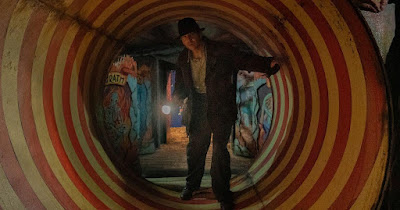
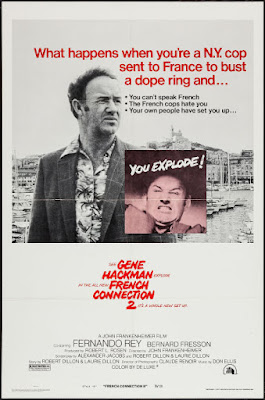
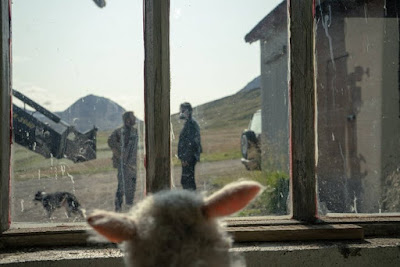
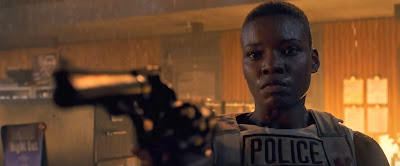
HALLOWEEN PURSUITS


Happy All Hallows Eve, devils and angels!

(Images courtesy of the Riptheskull collection, which I became aware of through the excellent Halloween-themed site Season of Shadows.)

********************************

FOR THE ITALIAN HORROR BLOG-A-THON: LUCIO FULCI'S DON'T TORTURE A DUCKLING


The following essay is my contribution to Kevin J. Olson's Italian Horror Blog-a-Thon, which features multiple links to all manner of fascinating and fun reading on this rich, Halloween-appropriate topic. Kevin writes the essential, and now eternally-Inglourious Basterds-linked blog Hugo Stiglitz Makes Movies. Thanks for the invitation to participate in this gathering, Kevin. It has been all kinds of fun!

********************************************

I come here not to bury Lucio Fulci (he died in 1996), but to praise him. At least this once. It’s time to admit that I’ve never much been one for the all-stops-pulled brand of zombie horror that gained Fulci his greatest degree of notoriety, at least here in the States among hard-core horror fans. I saw Zombie (originally known in Italy as Zombi 2) on its original run through America back in 1980 and have seen it a couple of times since, and I’ve never been able to key in on what his fans found to be so special about his work, beyond his coal-black take of humanity (a brand of nihilism that has always seemed to be too easy to come by and perhaps a little too fashionably adopted by some of his faithful) and his willingness to push the limits of the spectacle of gore. In the years since I’ve managed to see The House by the Cemetery and The New York Ripper, which both seemed pretty repellent to these eyes, and The Beyond, which was as visually spectacular as it was deeply silly. So while not particularly offended by the work of Fulci’s that I’ve seen (okay, there are moments in The New York Ripper I wouldn’t be too quick to try to defend), the word I would use to describe my feeling about his movies would probably be “indifferent,” which is why I thought, given his following, he might be a good candidate to write about for Kevin Olson’s Giallo Blog-a-thon.

But when I went to IMDb to begin my perfunctory research of the director I discovered that, before he became noted for the zombie pictures he had quite a career behind him already. Fulci’s first picture was released in 1959, and among those movies there are the requisite thrillers, of course, a comedy or two, a James Bond knockoff, even a couple of westerns. And more than any of his movies I’d seen so far, I really enjoyed discovering some of the titles for Fulci’s movies, their Italian names and especially the monikers with which they were dubbed in other countries. Some of the juicy nuggets I found include: Come inguaiammo l’esercito (known in the U.K. as How We Got Into Trouble With the Army), Colpo gobo all’italiana, a.k.a. Getting Away With It the Italian Way, which was translated literally in the U.K. as Hunchback Italian Style (!!!), Tempo di massacre (Massacre Time), The House of Clocks, The Ghosts of Sodom, A Cat in the Brain, a little morsel called The Senator Likes Women which, translated from its longer Italian title in the U.K. became The Senator Likes Women… Despite Appearances and Provided the Nation Doesn’t Know, Una sull’altra (a.k.a. One on Top of the Other which became in France Perversion Story), and A Lizard in a Woman’s Skin. These last two titles come highly recommended by Fulci enthusiasts who note their placement at the roots of the giallo genre, which were initially much more closely entangled with murder mystery than the onslaught of bloody guts which characterized the later zombie films.


The third giallo directed by Fulci, immediately following Una sull’altra (1969) and A Lizard in a Woman’s Skin (1971), was the equally perversely titled Don’t Torture a Duckling (1971) which, in Italy, was known as Don’t Torture Donald Duck. (Undoubtedly fear of reprisals from the Mouse House was behind the adopting of the more generic water fowl featured in the U.S. release title.) And beyond my curiosity about a movie with such a weird name, I was very interested to see what a Fulci movie sans the living dead would look and feel like given that everything I’d seen of his to this point was all grime and nastiness and general ineptitude decorated with buckets full of grue and shock effects. And from the very first striking images, Don’t Torture a Duckling announced itself to this cynic as something very different from what I’d experienced before. In a series of gorgeous Panavision long shots over which the credits play, we see the rolling hills of a beautiful Italian countryside and how they have been interrupted, violated by a long, elevated highway (itself strangely beautiful) which snakes its way through the landscape announcing the impact of modern civilization on the tiny village over which it runs.


It’s a memorable way to introduce the movie’s overriding theme of a clash of cultural assumptions which reveal that the forces of modernity may be no more enlightened than the village’s superstitious, intolerant and relatively atavistic citizenry. The movie’s thematic strands are expanded when we witness an anguished woman unearth the skeleton of a tiny baby, perhaps stillborn, perhaps murdered, her hands bloodied by tearing at the earth as she carries it away. Later, a child is abducted from this rural Southern Italian village, and the carabinieri, a team of local police augmented by city officers, arrest Guiseppe, a local simpleton, when he is caught collecting the ransom money. But as it will become apparent in Fulci’s narrative, what appears to be true may not be, or may have hidden angles, truths within truths. Giuseppe admits the extortion but claims that the boy was already dead when he found him, and while he is in custody another child’s body is found.


The focus immediately shifts to two other suspects: Patrizia (the luscious Barbara Bouchet), a well-off, spoiled and decadent woman who has returned to the village where her father was born to wait out the heat from a drug scandal of some sort, and Maciara (Florinda Bolkan, superb and fearless), the woman we saw earlier digging up the bones of her baby. Already looked at with suspicion by the locals, Maciara has been driven to the brink of madness over grief at the loss of her own child, and on top of that she may be a witch. After a third body is discovered, she attempts to hide but is soon captured. It is here that Fulci drops his first narrative bomb: Maciara, already seen covering the corpse of one of the victims with earth, her hands bloodied in the same way we saw them earlier, confesses to killing all three boys with her black magic. But when it soon becomes apparent that she couldn’t have killed the third child she is released, an act of legal justice which nonetheless condemns her to a horrific death at the hands of outraged locals who have perhaps always hated or been frightened by her and who now have moral grounds (however specious) on which to unleash their rage.


One of the rural officers advises against releasing Maciara out of fear of just such a result, and it is from this reluctance of the urban-based officers to understand or fully comprehend the differences which operate within these two worlds that Fulci wrings the richest thematic juice out of his narrative. The observation of stereotypes streak straight through Don’t Torture a Duckling, whether they be the guttural behavior of a mob screaming for revenge, or the salacious tendencies of a slinky, somewhat perverse seductress as she torments a horny 10-year-old boy (who has been hypnotized by the sight of her nude body) with suggestions of a sexual initiation, or the superiority (or even simple functionality) of civilized morality in a setting where other mores and codes may more strongly apply. But Fulci gives more than a suggestion to their flip sides as well. Are the stereotypes justified, or do they reveal degrees of opposite truth? We’re asking the questions right up to the point where the movie forces us to face our own presumptions as audience members, and those of the characters, about the capacity of a mentally challenged girl to understand her situation, as well as our faith in figures of religious authority. (Rest assured, Fulci has none, and though his point of view got him and this movie into trouble in Italy in 1971, it wouldn’t be inaccurate to say that a large portion of the population—though perhaps still not in Italy—has caught up to his cynicism regarding men of the cloth.)

Don’t Torture a Duckling (the title refers to a doll purchased for the aforementioned mentally challenged girl by Patrizia) is a tight, fascinating, visually acute thriller which, for all of its relative sophistication in the Fulci oeuvre, reveals a filmmaker who was, in 1971, considerably more than the uninspired hack whose career devolved into ever more lurid and inept gross-outs. (Fulci’s zombie fests were apparently heavily tampered with, so it’s possible that I’ve never been exposed to a true representation of his genius in this field, but honestly, what’s left on screen that is clearly of his origin doesn’t inspire a lot of confidence.) My most immediate frame of comparison, given my limited exposure to Fulci’s work, is to look at Duckling up next to The New York Ripper which, incredibly, features a psycho who disguises his voice by quacking and imitating Donald Duck. Ripper is grindhouse grimy and lumpy, and prone to extended episodes involving the lovingly observed evisceration and nipple-slicing of naked and bound female victims which make it hard to refute charges of misogyny against the director. Duckling, on the other hand, is brutal and visually elegant, sometimes even funny, and in it Fulci clearly harbors more sympathy for the women than the movie's often barbaric or self-righteous men. Duckling also highlights far more narrative sophistication than I would have ever thought possible of Fulci. The last half of this movie had me reevaluating characters and situations and processing visual clues and red herrings at a highly pleasurable rate.


And the evidence of Fulci’s visual mastery is everywhere—from the beautiful, corrupted landscapes (that elevated highway is inexplicably haunting), to the director’s frequently witty graphic continuity in the film’s visual connective tissue (imagery of fetuses and small babies abound), and the fluidity of his use of split-frame deep focus in which two impossible close-ups are married in wide-screen Panavision and given equal emotional and graphic weight. This last trope in particular recalls the heights to which Brian De Palma would eventually take the same technique, and as I prepared for this blog-a-thon by watching Duckling and also Giuilano Carnimeo’s The Case of the Bloody Iris, the influences on De Palma became fascinating to note. Carnimeo stages a couple of murderous set pieces, one in an elevator, that present evidence of his film’s influence on Dressed to Kill, and in Duckling Maciara’s horrific beating at the hands of a group of men led by the father of one victim, and her struggle to find help as she drags herself up a hillside and beside a road, has some of the same agonizing visceral power and emotional laceration one experiences witnessing the ordeal and eventual death of Oanh in Casualties of War. I can think of no higher praise for a director who has been accused of enjoying the tortures he has inflicted upon his female characters. Would that the evidence to refute such claims n Fulci’s work extended beyond Don’t Torture a Duckling. (That’s an invitation, Fulci fan, to write in and lead me to more evidence to the contrary, by the way!)

On the strength of Don’t Torture a Duckling I am confidently off to discover what else about Fulci I might be ignoring as others rush to celebrate the excesses of his tedious (to my eyes) late period. In particular, I cannot wait to see the two gialli that preceded Duckling-- A Lizard in a Woman Skin also stars the magnificent Florinda Bolkan—and I absolutely must know what a western by Lucio Fulci looks and feels like. But I also have to admit being kind of tickled thinking of what rabid fans of Fulci’s hard-core decayed flesh opuses might make of this movie. It definitely has its blood-splattered highlights (including what must be the funniest fall from a great height ever committed to film, Fulci’s official calling card re the gory standards to which the rest of his career would aspire), but it is so much more subdued, so much more concerned with what have to be considered classical cinematic values (as least in comparison to Zombi 2) that, Kevin J. Olson excepted, I wonder if the Fulci faithful would be as patient with this one. Don’t Torture a Duckling also features the best cast of any Fulci movie I’ve seen—in addition to the pulchritudinous delights afforded by Barbara Bouchet and the freaky, heart-wrenching performance of Florinda Bolkan, there’s Tomas Milian as a sympathetic reporter who initially suspects Patrizia of the crimes and then teams with her to seek out the real killer, Marc Porel as Don Alberto, the priest of the local parish who anguishes over several things, perhaps the least of which is the disappearance of the three boys, and revered Greek actress Irene Papas as the mother of the aforementioned duckling-bearing retarded child (as well as another of the cast of characters), whose own mental stability is shrouded in secrets and doubt. Best do as I did: put aside your distaste for the Lucio Fulci of Zombie and The New York Ripper and give this one a spin. The title may seem perverse and silly, but Lucio Fulci’s Don’t Torture a Duckling turns out to be one of the crown jewels of the Italian giallo genre.

*****************************************

For further reading, I recommend essays by Tor at BloodyGoodHorror.com, Nik Allen at 70sFastRewind.com, Christian Sellers at RetroSlashers, and a rather brilliant visual exegesis of the movie’s visual motifs, including the rural vs. urban, pagan vs. Christian dichotomies, as well as a look at that fall from a great height I mentioned previously, from Howard S. Berger and Kevin Marr at the wonderful (only slightly tongue-in-cheek) blog Destructible Man, devoted to "The Theory And Practice of Cinematic Prosthetic Demise (a.k.a. The Dummy-Death In Film)." DM is where I appropriated some of the great screen grabs featured in this post. Thank you very much, gentlemen.

*****************************************

Friday, October 30, 2009

WHERE THE DIRTY HIPSTERS ARE


Plenty of other stuff to get to and no time to do it until after work tonight, but even so, this one was to good to pass up. Thanks for the tip on this one go to Andrew Blackwood, who in addition to being a good friend and one of this blog's original loyalists also directed a short film comedy called Kumar's Day at the Park (featuring my two lovely daughters in pivotal supporting roles) which is set to have its premiere this coming Sunday. Hopefully there will be an uploaded version I can share that will become available soon. Until then, pity poor Max, who can't get a rise out of these sullen bastards even dressed like a Wild Thing. ("Is that vintage, or is that faux designer chic?")


***********************************************

Tuesday, October 27, 2009

THE RESTLESS SPIRITS OF MARION KERR’S GOLDEN EARRINGS


There are a couple of restless spirits swirling about the turbulent emotional center of Golden Earrings, and though one in particular haunts the characters within the fabric of the film itself, it is the second that haunts the viewer long after the movie is over. Directed and written by actress Marion Kerr (who plays one of those spirits), the movie begins, as so many independently financed and produced movies that must make do with readily available settings seem to, as a group of friends gather in an apartment for a going-away party. Sara (Kerr) is off for a long weekend to visit her mother after a fight with her estranged boyfriend. Sara is somewhat distraught over the decision to take the trip and she tries to hide her nervous tension, but the five friends who are there to support —three men (John T. Woods, Teddy Goldsmith , Anthony Dimaano) and two women (Julia Marchese and Lauren Mora)—pick up on her ambivalence quickly. At first the gathering looks like it’s going to be yet another occasion for post-Tarantino slacker gab over pizza and beer, but the writer-director disarms this fear with relative ease. The rhythm of the group’s chatter may seem familiar at first, but as Kerr’s calm inquisitive attitude toward the dynamics of the relationships at the kitchen table begins to reveal itself it becomes clear she, thankfully, has something else up her sleeve.

Ronnie (Julia Marchese) is taking Sara’s departure with a heavier heart than the others, and her interaction with Sara as Sara prepares to leave reveal the bonds of a long, perhaps tense, but meaningful friendship that, at least as Ronnie sees it, may be being threatened by Sara’s decision to consider reuniting with her boyfriend. There’s a suggestion of sexual attraction on Ronnie’s part, but that element is part and parcel of the kind of intense relationship that often develops between women which often goes unspoken, unacknowledged, and is only a fraction of what forms the bond in the first place. Kerr and Marchese are comfortable with the suggestion, but it doesn’t overtake their conception of how the two women relate to each other. With a few short strokes in the film’s first 15 minutes they fulfill what Amanda Seyfried and Megan Fox could not in the entirety of Jennifer’s Body-- that is, conveying to the audience the understanding of how two clearly different women—one confident, the other insecure-- could survive everyday adversity and interpersonal tension while remaining friends, as well as what would compel that friendship in the first place. (And there’s no need for the tease of hot girl-on-girl action to fill in the holes in the characters left by the writer and director in Golden Earrings.)

Sara leaves and the group is left to their own devices for the evening. Ronnie suggests they have a round on the Ouija board and they all jump in, save Goldsmith who abstains (his elucidation of his reasons why is an early highlight). The group apparently makes contact with a recently deceased spirit who, to their horror, reveals itself to be that of Sara. Attempts to contact their friend via phone are unsuccessful and the group begins to suspect the worst—that Sara may have had a fatal accident shortly after leaving the apartment. But no one fears more than Ronnie, the depth of whose attachment to Sara begins to reveal itself, along with even darker undercurrents, as her terror begins to intensify and it becomes apparent, after her other friends have departed and she waits in her apartment for news of Sara’s fate, that something else may be going on. That Ouija game box won’t stay put away. A record of an old jazz vocalist keeps cueing up and playing on its own. Ronnie may not be alone.


Golden Earrings is a bit of a revelation on two counts. This is Marion Kerr’s first effort as a feature director. It is astonishing in that regard for its confidence, for the assurance she expresses through her use of the camera and for her ability to construct solid, emotionally suggestive scenes without the requisite visual gimmickry that is the typical hallmark of a first-time filmmaker. Kerr’s patience here (and her appeal and ability as an actress to hint at the tremulous inner-life of the outwardly strong Sara) are strengths which inform the movie as a whole and allow the creepiness that moves in like a silent, insistent fog to settle into the viewer’s bones. As Golden Earrings begins to reveal its psychologically anchored horrors in a manner befitting a minor-key Repulsion, Kerr’s directorial nuances, and restraint, become even more critical and impressive. Kerr turns the screws, all right, but at a slightly different angle and speed than what we may be prepared for. Like a deceptively tossed breaking ball, her talent for chilling an audience’s spine is right in the groove. She has the sharp instincts of an old pro, the curiosity and openness of a youngster, and a bright future in which to hone her relatively raw talent into something resembling a veteran filmmaker’s unique vision.

But even more impressive is the performance Kerr gets from her lead actress, Julia Marchese. In reality the two women are old friends, and they are able to channel that sense of experience into a very believable connection between Sara, who we sense is struggling to gain footing in life outside the sphere of her relationship with her best pal, and Ronnie, who is perhaps more comfortable in the existing dynamic between them than is advisable. So when Sara leaves the limited parameter of the world according to Ronnie (as we experience it), it’s not too surprising when that world begins to unravel. The real pleasure in watching Marchese here is that the unraveling is never ostentatious, showy or theatrical. Quite the opposite, Marchese seduces us into accepting what Ronnie sees, as she sees it, by underplaying the creeping unease and disorientation, never projecting beyond what we already have experienced ourselves through Kerr’s patient design. In the process, she proves herself to be an actress who rewards patient observation with a richness of empathy, and she has a lovely physical screen presence that proves integral to getting the viewer on her side. There are moments during which all we are given to register the unmoored fear Ronnie feels over Sara’s disappearance and her apparent reappearances is the contrapuntal placidity of Marchese’s expressive face as she surveys a trashed, empty room or stares off into ostensibly unoccupied space from her bed. But when the fear begins to surface in ever-more disturbing fashion, Marchese proves up to the task as well, offering the audience a classically modulated template of terror over which plays the conflicting emotions of hallucination, the cold fear of visitation from a deceased spirit, and the even more complicated prospect of a mind coming undone. It’s really a superb piece of acting, no less so because it comes in such a modest production, and it matches the movie’s ability to conjure emotional power from apparently meager resources. If Golden Earrings is any indication, however, Marchese’s resources are far from meager. Her work as Ronnie is astounding in that she manages aggressive, lapel-grabbing desperation at the same time as she begins to recede and curl away into memories of a world that was probably never exactly as she imagined or needed it to be. At no time does Marchese aim for the rafters, yet what she does here has a personal power to hit you in the chest as if she felt even the rafters weren’t high enough. Hers is the spectral presence that stays with you after the movie’s final frame.

If and when this movie makes it to the festival circuit, don’t be surprised if Julia Marchese is a name you start hearing more often. This is the caliber of acting that independent films often strive for, but rarely achieve. And Golden Earrings is proof positive that independent films can still sidestep the traps that have made the shortcut term “indie” synonymous with myriad D.I.Y. mediocrity and clichés. It’s a solid, affecting thriller with a star-making performance (in a perfect world) at the eye of its hair-raising emotional storm, and I hope you get a chance to see it soon

.

The trailer for Golden Earrings

Go to the Golden Earrings site for more information.

********************************************